Watershed
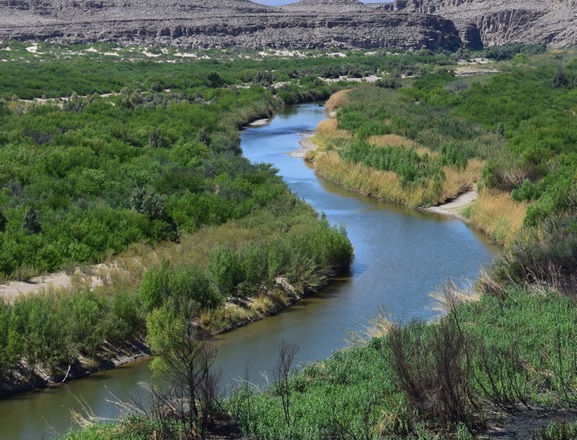 As defined by the EPA, a watershed is the land area that drains to one stream, lake or river. Watersheds exist at different geographic scales, from very large watersheds such as the land area that eventually drains to the Mississippi River, to the relatively small land area that drains to a local stream or pond. The health of a watershed directly affects the water quality of the body of water that it drains to. Because of this connection, healthy wetlands are an integral component of healthy watersheds, providing many essential ecosystem services.
Efforts to protect, restore, enhance and create wetlands improve overall watershed health and support climate change adaptation. Both traditional and innovative wetland protection and restoration projects - including hybrid systems using green infrastructure – are increasingly being employed to provide critical ecosystem services and benefits, such as increased flood and drought protection, clean drinking water, and habitat.
In 2019, NAWM completed a two-year project, entitled Healthy Wetlands, Healthy Watersheds, to help states and tribes build their capacity around integration efforts that leverage state wetland restoration and protection programs to improve watershed health. The products of this project include a white paper which can be found on our publication page, and state program integration case studies, watershed project integration case studies, and other support resources which are listed below.
NAWM Resources for States and Tribes
State Wetland Program Integration Case Studies (NAWM, 2019)
NAWM State Wetland Program Integration Case Study: Indiana: Improving Program Efficiency for Wetland and Stormwater Permitting through Joint Management in Indiana. To Learn more about Indians' case study, view NAWM's Indiana Case Study Webinar here.
NAWM State Wetland Program Integration Case Study: Minnesota: Integration of Groundwater Appropriations Permitting and Surface Water Permits, including Wetlands
NAWM State Wetland Program Integration Case Study: Minnesota: "One Watershed, One Plan": An Initiative to Leverage Date to Get Better Results for Clean Water in Minnesota
NAWM State Wetland Program Integration Case Study: Missouri: Cross-Program Wetland Coordination in Missouri
NAWM State Wetland Program Integration Case Study: Nebraska: Incorporating Wetlands into Reservoir Rehabilitation Projects for Fisheries and Other Benefits in Nebraska. To learn more about Nebraska's case study, view NAWM's Nebraska's Case Study Webinar here.
NAWM State Wetland Program Integration Case Study: New Mexico: Integrating Wetlands into Nonpoint Source Plans and 319 Projects
NAWM State Wetland Program Integration Case Study: Vermont: Integration of the Vermont Watershed Management Division’s Water Quality Monitoring Programs: Combining Wetland, Lake
NAWM State Wetland Program Integration Case Study: Vermont: Wetland Restoration and TMDLs in Vermont' s Lake Champlain Basin
Watershed Project Integration Case Studies: Factsheets and Data Sheets (NAWM, 2019)
NAWM Watershed Project Integration Case Study: Delaware River Basin (DE): Factsheet and Datasheet
NAWM Watershed Project Integration Case Study: Upper St. Jonh’s River (FL): Factsheet and Datasheet
NAWM Watershed Project Integration Case Study: Beaver Creek Watershed (IA): Factsheet and Datasheet
NAWM Watershed Project Integration Case Study: Anacostia River Watershed (MD): Factsheet and Datasheet
NAWM Watershed Project Integration Case Study: Vermillion River Watershed (MN): Factsheet and Datasheet
NAWM Watershed Project Integration Case Study: Jemez River Watershed (NM): Factsheet and Datasheet
NAWM Watershed Project Integration Case Study: Johnson Creek Watershed (OR): Factsheet and Datasheet
NAWM Watershed Project Integration Case Study: Lewisville Lake Watershed (TX) Factsheet and Datasheet
NAWM Watershed Project Integration Case Study: Yakima River Basin (WA): Factsheet and Datasheet
Healthy Wetlands, Healthy Watersheds Worksheet for Integration Partners
Based on findings from NAWM’s Healthy Wetlands, Healthy Watersheds Project, this worksheet facilitates dialogue between partners as they conduct internal assessment of integration readiness. Partners should work together to review and discuss their levels of agreement with each statement and use the remainder of the worksheet to guide planning efforts. This worksheet is designed to supplement other capacity building resources and guides.
Webinars on the Healthy Wetlands, Healthy Watersheds Project
NAWM Members' Webinar
- Healthy Wetlands, Healthy Watersheds: Helping States and Tribes Develop Watershed-level Wetland Projects and Integrated Programs - Held May 8, 2019 (you must be an NAWM Member to view this recording).
Natural Floodplain Functions Alliance Webinars
- Reaching Across the Border to Improve Water Supplies for People and Nature: The United States, Mexico, and the Colorado River - January 9, 2018
- Wetlands by Design: A watershed approach for Wisconsin - May 15, 2018
- Green Infrastructure Case Studies: How to Successfully Lower Risk in Your Community - September 18, 2018
- The Value of Nature: Practical Applications for Managers - Held February 21, 2017
- Integrated Stream and Wetland Restoration: A watershed approach to improved water quality on the landscape -Held July 25, 2017
- The Iowa Watershed Approach: A New Paradigm for Flood Resilience - October 24, 2017
- Towards Resilient and Sustainable Floodplains - December 19, 2017
Useful External Publications and Resources
EPA Website on Healthy Watersheds: Protecting Aquatic Systems through Landscape Approaches
EPA Website on Incorporating Wetland Restoration and Protection in Planning Documents
Identifying and Protecting Healthy Watersheds: Concepts. Assessments and Management Approaches (EPA, 2012)
Healthy Watersheds Initiative: National Framework and Action Plan (EPA, 2011)
Handbook for Developing Watershed Plans to Restore and Protect Our Waters (March 2008)
Center for Watershed Protection: Urban Stormwater Retrofit Practices Manual (Center for Watershed Protection, 2016)