NAWM Members
Members receive weekly issues of Insider’s Edition and bimonthly issues of Wetland News per year. If you are a member already, you may read the latest issue of Insider’s Edition and Wetland News (NAWM’s membership newsletter) by logging in to your Members Portal. NAWM membership benefits information.
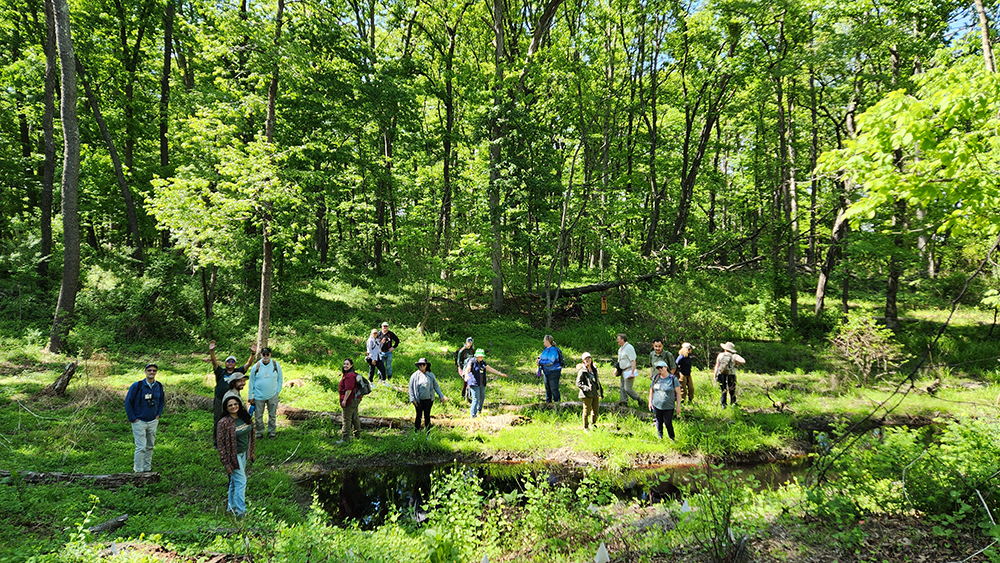
NAWM is looking for photos of our members working in the field—whether inside or outside, regulation or restoration, monitoring & assessment—or mapping & management of wetland resources. We would like to feature photos of wetland professionals doing a wide range of activities in the field of wetland science, policy and management. Please email these photos to Laura at laura@nawm.org for use on the NAWM website and/or in our membership newsletter, Wetland News.
Member Spotlight
The NAWM membership includes state, tribal, federal, and local wetland managers, regulators, researchers, field scientists, academics, private consultants, and more. These wetlanders work across the United States in a wide variety of wetlands and related aquatic resources. To celebrate the important work that NAWM members are doing, each month NAWM shines the Member Spotlight on one member to learn more about the good work they are doing to protect and restore our wetland resources, how they came to work in wetlands, and how being a member of the Association benefits their work. If you would like to nominate a member for a future Member Spotlight, please reach out to Portia Osborne, NAWM Executive Director, at portia@nawm.org. View Member Spotlight Archive.
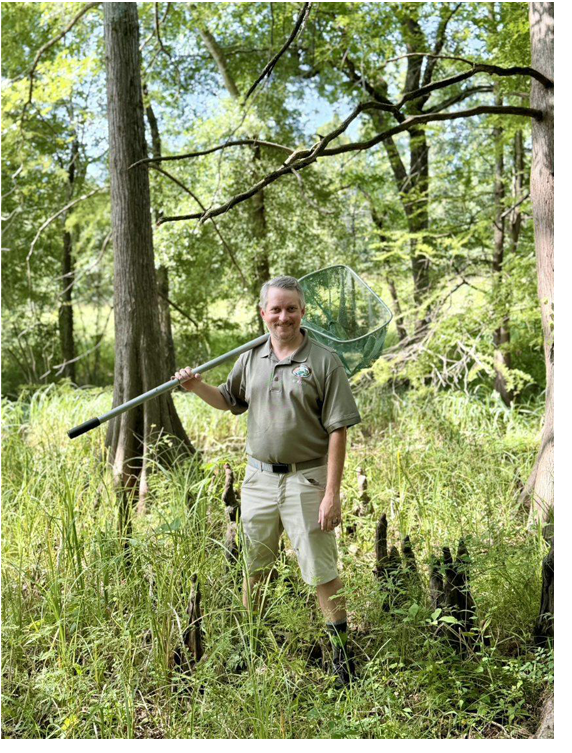
Justin Stroman
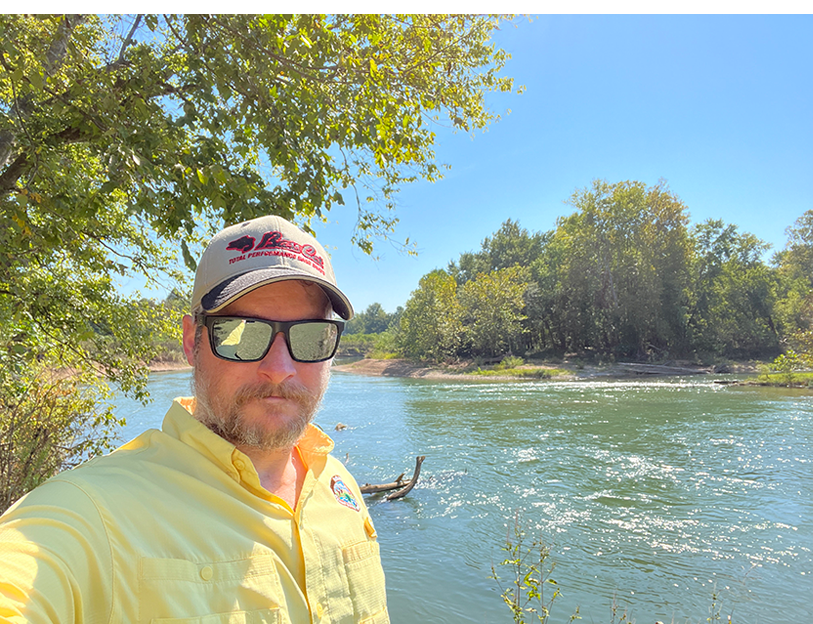
Justin Stroman works for the Arkansas Game and Fish Commission (AGFC) as the Environmental Review Supervisor in the Conservation Support Division.
What do you do as an Environmental Review Supervisor?
My job involves supervising a small team that reviews development projects for potential impacts to fish and wildlife resources of the state, and making recommendations to avoid, minimize, or mitigate for those impacts.
What is your favorite part of your job?
The thing I love most about my job is being able to make real, meaningful conservation happen on the ground and not just in theory. It's so rewarding to visit an area you were successfully able to get developers to avoid impacting. Arkansas is a very diverse state geographically, so I get to see a lot of varied ecoregions. Also the people I work with are top notch.
What is one of your biggest professional accomplishments?
The biggest professional accomplishment was establishing Healing Springs Natural Area, a wetland and stream mitigation site co-managed by the Arkansas Department of Transportation and the Arkansas Natural Heritage Commission. Healing Springs was a heavily impacted agricultural area slated for residential development. This property happened to have two very rare fishes occupying it, the Least and Arkansas Darters. Through many tireless negotiations, I was successfully able to convince ArDOT to acquire part of the area as mitigation for a highway project, and was able to incorporate green spaces into the neighborhood, ultimately protecting the streams that the darters utilize.
What is your favorite wetland species? Why?
I really love all species of crayfish, but if I had to pick my favorite wetland species, it'd probably be the painted devil crayfish, Lacunicambarus ludovicianus. Other notable contenders for favorite wetland species are the banded pygmy sunfish, the goldstripe darter, and the prothonotary warbler.
How did you end up working in wetlands?
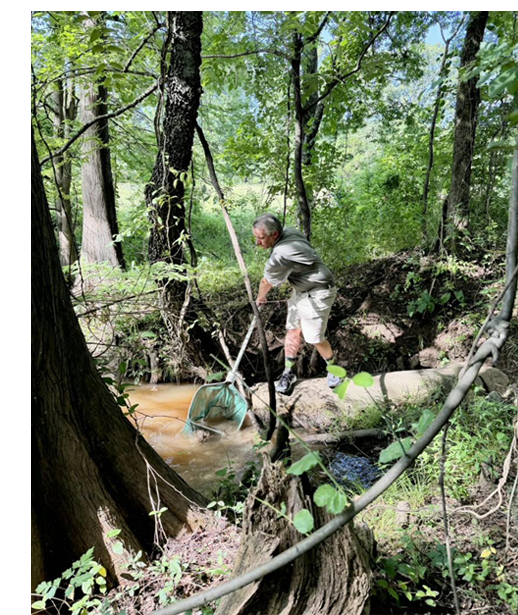
My first job was in the nongame aquatics program here at AGFC, where one of my jobs was to survey for the 60+ species of crayfish we have in Arkansas, many of which are primary burrowers in wetlands. That skillset served me well for my current role supervising our environmental review program.
What advice do you have for someone interested in getting started in wetlands work?
Look for as many opportunities as you can to integrate a variety of skill sets (biology, climatology, hydrology, soil science, remote sensing, GIS, etc.) into your work as possible. It will help you stay relevant and give you a well-rounded resume. Also hang in there! There may be some bumps in the road with regulatory efforts, but it's worth the fight. We can do this together!
How long have you been a member of NAWM? How have you participated in NAWM?
I have been a member of NAWM since 2017, when I first attended an annual meeting of ASWM. I currently serve on the Finance Committee.
What is your favorite benefit of being a member of NAWM?
The networking and professional development opportunities, and the camaraderie that NAWM members have with each other. I consider many of the folks I've met through NAWM to be lifetime friends.
What is your favorite NAWM memory?
This is really hard to pick, as I have so many great NAWM memories, a lot of which were made at social events during the annual NAWM meeting. I think one of my most recent favorite memories was playing a round of disc golf with other NAWM colleagues at the beautiful Skamania Lodge in Washington.
If you would like to nominate a member for a future Member Spotlight, please reach out to Portia Osborne, NAWM Executive Director, at portia@nawm.org.